








About Free Kick Football
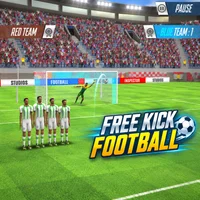
Free Kick Football is about finding a route to goal from a dead ball. The wall blocks the obvious line, the goalkeeper guards the space behind it and the distance changes how much power you need. Rather than simply aiming at a corner, decide whether the ball should bend around the wall, travel straight or clear it before you take the shot.
How To Play
Read The Wall And Route
Study the wall before taking the shot and identify the side with the clearest route. Check the available space around the defenders so you can choose a suitable approach.
Choose The Right Shot
Decide whether the situation calls for curl, a straighter drive or a controlled chip. Set enough power to clear the wall while keeping the ball on target.
Adjust For Each Challenge
Check the goalkeeper's starting position before committing to the kick. When the distance or wall becomes harder, change one variable at a time so you can understand how each adjustment affects the shot.
How to read the free-kick route
Start with the wall: is there a clear line around it, or do you need to lift the ball over the top? Then check the keeper's starting position and the distance to goal. A curling shot can bend back toward the target after clearing the defenders, but adding more power can also send it too far. Change one input at a time to learn what made the last shot miss.
Controls
Practical Tips
-
01
Learn one reliable curl before experimenting with extreme angles.
-
02
Read the wall before deciding where the ball should finish.
-
03
Adjust power gradually when distance increases.
-
04
Watch the goalkeeper's starting position instead of always targeting the same corner.
FAQ
Why is the wall so important in Free Kick Football?
It blocks the most direct route, forcing you to choose a path that combines clearance with a useful finishing angle.
When is a curved shot useful?
When the wall occupies the direct lane and you need the ball to move around it before reaching the goal.
Should I always aim for the same corner?
No. The wall and goalkeeper position can make different finishing routes more attractive from one attempt to the next.
What happens when the distance increases?
You generally need more travel and power, but too much force can make the ball miss the useful finishing area.
Why change one setting at a time?
Separating power and curve changes makes it easier to understand why a particular trajectory succeeded or failed.
Who developed Free Kick Football: 3D Soccer?
Steam lists Yusuf Islam Seyhan and Samet Acar as developers, with Inspector Studios as publisher.
Is Free Kick Football a full match simulator?
No. It concentrates on repeated free-kick situations rather than controlling an entire football match.